
Why Underride Truck Accidents Often Cause Catastrophic Injuries
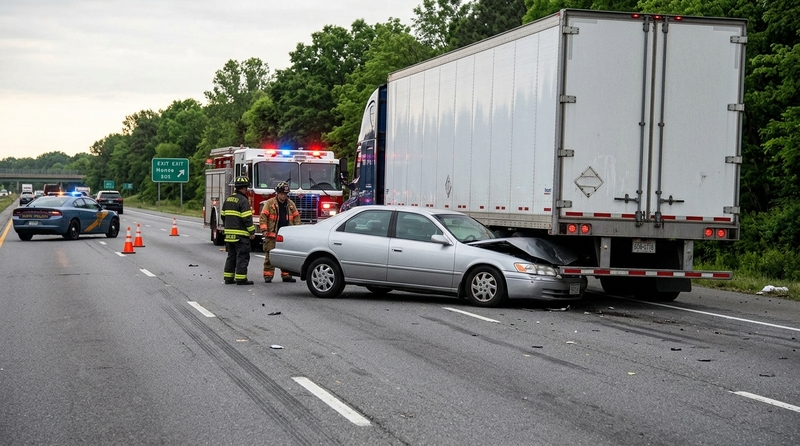
Underride collisions aren’t your typical car wreck. When a smaller vehicle slips under a trailer, it completely bypasses the car’s safety systems, such as airbags and crumple zones, causing the trailer to strike the passenger compartment directly. Because these collisions frequently strike the upper portion of a vehicle where the A-pillars and roof are most vulnerable, the results are disproportionately severe. Understanding the intersection of physics and safety regulations is essential for those seeking help from semi-truck accident legal experts, as these professionals are uniquely positioned to navigate the complex liability issues inherent in such devastating events.
The Failure of Conventional Safety Systems
Today’s vehicles are equipped with complex crash management systems designed to absorb the kinetic energy of an impact and protect the occupants of the vehicle. But these systems rely on the force of impact to strike the vehicle’s reinforced frame. In an underride crash, the trailer often strikes the windshield and/or roof directly, bypassing the safety mechanisms designed to protect passengers. This total failure of protection is why even moderate-speed collisions often result in traumatic brain injuries or fatal outcomes. Because the point of impact is so high, the structural integrity of the car’s cabin is almost always compromised, leaving occupants with little space for survival.
The Regulatory Landscape and Guardrail Deficiencies
Federal regulations mandate the installation of Rear Impact Guards (RIGs) on commercial trailers to prevent exactly this type of tragedy. Yet, these guards often fail to perform as intended. Research published by the Insurance Institute for Highway Safety states that many current underride guards are not strong enough to withstand the force of a modern passenger vehicle, particularly in offset collisions where only the front of the vehicle hits the guard. “These technical failures are a critical point of focus in litigation,” it adds. “It is not simply a matter of driver error; it is often a matter of inadequate equipment standards that have not kept up with modern vehicle engineering and road safety requirements.
Investigation and Liability in Underride Cases
Proving liability in an underride accident requires a deep understanding of both mechanical failure and federal compliance standards. To find out why a guard failed to prevent a car from sliding under a trailer, one must find out whether the guard was properly maintained, whether it was built to structural standards when it was originally manufactured, and whether the trucking company ignored any signs of wear or improper modifications It’s a rigorous process with forensic engineers and accident reconstruction specialists demonstrating how the equipment failed Without a specific legal strategy, insurance companies often attempt to place the entire blame on the driver of the smaller car, glossing over the mechanical flaws that allowed the disaster to occur.
Seeking Justice Through Specialized Advocacy
The road to recovery from an underride crash is one of huge emotional and financial strain. Victims are often left with life-altering injuries requiring long-term medical care, rehabilitation, and a major lifestyle adjustment. By partnering with experienced semi-truck accident legal experts, victims can hold responsible parties, from trucking companies to trailer manufacturers, accountable for safety oversights. Experienced attorneys collect key evidence and quantify ongoing losses. They dismantle corporate defenses and help you secure the assets necessary to rebuild a strong future.
Conclusion
Underride crashes are among the most lethal accidents on the road, mostly because passenger vehicles have no structural defense against a trailer’s frame. The wreckage is almost always severe, yet trucking companies frequently look for ways to deflect blame right from the start. Dealing with these cases requires digging into maintenance records and safety regulations that most people aren’t equipped to handle on their own. Getting help from someone who truly understands how to hold carriers accountable is the only way to ensure your long-term medical and financial needs are actually covered.
