
What Happens to a Trucking Business When a Vehicle Gets Taken Off the Road
Every trucking operation, whether it is a single owner-operator or a small fleet, runs on a simple equation: trucks on the road equal revenue, trucks off the road equal losses. When a commercial vehicle gets pulled from service after an accident, whether because of damage, regulatory compliance issues, or driver injury, that equation breaks down fast. The financial consequences can be severe, and they tend to compound quickly for smaller carriers who do not have deep reserves to absorb the hit.
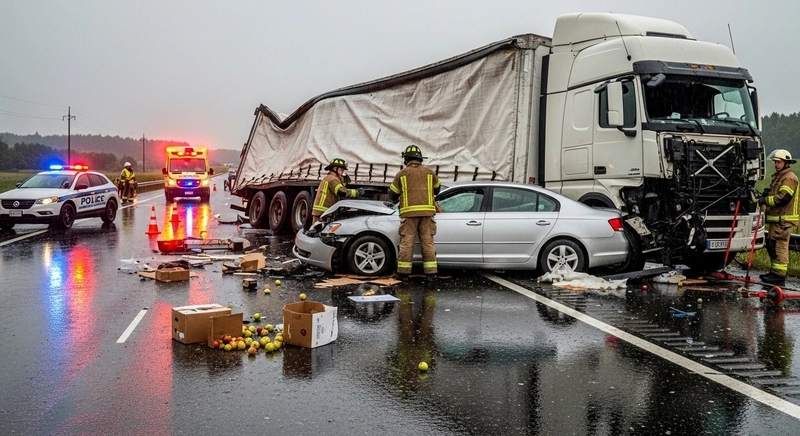
Understanding what those consequences look like, and how fleet operators prepare for them, matters both for road safety discussions and for anyone following the business side of commercial transportation.
For operators who work with lenders on transportation funding, one thing comes up repeatedly: most carriers fixate on the repair bill after an accident, but that is rarely the sharpest financial pain. The more immediate problem is the revenue that stops the moment a truck goes offline. A commercial vehicle averaging 10,000 miles per month at reasonable freight rates represents meaningful monthly income, and when it sits in a shop for two, three, or four weeks, those loads have to be declined, handed to competitors, or covered through expensive spot market alternatives. For a carrier running thin margins, which describes most of the industry, those weeks off the road can erase months of profit.
According to the Federal Motor Carrier Safety Administration’s Large Truck and Bus Crash Facts, tens of thousands of large trucks are involved in injury and property-damage crashes every year. Many of those incidents result in vehicles being taken out of service, sometimes temporarily and sometimes permanently. The financial ripple from even a single vehicle going down is something most small carriers are not fully prepared to manage.
Driver Absence Compounds the Problem
If the driver is injured in the accident, the financial picture gets harder. Finding a qualified replacement driver on short notice is expensive and uncertain. Recruiting, onboarding, and clearing a new driver through the FMCSA’s Drug and Alcohol Clearinghouse takes time, and regulations around medical certification and license verification mean that corners cannot be cut. Meanwhile, the truck may be repaired and ready before the operator is in a position to legally put someone behind the wheel.
The combination of a truck in the shop and a driver out of commission simultaneously is one of the more punishing scenarios a small carrier can face. Owner-operators, who represent the majority of U.S. motor carriers, have essentially no buffer in this situation. The business stops generating revenue and the fixed costs, including insurance, truck payments, permits, fuel cards, and compliance fees, do not stop arriving.
Insurance Covers Some of It, But Not All of It
Commercial trucking insurance will cover vehicle repairs and liability claims stemming from a crash, but it typically does not compensate for lost freight revenue or the operational costs a carrier continues to carry during the downtime period. Business interruption coverage exists, but it is not universally carried, particularly among smaller operations that are watching every dollar in their premium spend.
The American Transportation Research Institute’s operational cost research consistently shows that non-fuel operating costs for trucking companies have been rising, with insurance being one of the fastest-growing expense categories. Carriers that are already paying higher premiums due to their safety rating or fleet age have less margin to absorb a claim period, and some face policy complications that delay the repair process further.
Gap coverage, deductibles, and disputes over liability all create situations where the carrier is waiting on money while the bills keep coming. That waiting period is where many smaller carriers run into serious cash flow trouble.
How Operators Keep the Business Running Through Downtime
The carriers that tend to weather these situations best are the ones that have access to capital before they need it rather than scrambling for it after an accident has already happened. A business line of credit or working capital facility that is already in place means a carrier can cover payroll, lease payments, and operating expenses during the repair window without going into default on obligations or losing clients who cannot afford to wait.
Some operators establish those funding relationships during normal operating periods, precisely so the money is accessible when something unexpected happens. Having a facility in place before an emergency is a fundamentally different situation than trying to qualify for financing while a truck is sitting in a body shop and revenue has already stopped. Lenders can evaluate an application more cleanly when the business is operating normally, and carriers with pre-existing credit facilities do not have to make decisions under duress.
Fleet Replacement and the Cost of Growing Past the Problem
For carriers who lose a vehicle that is too damaged to repair economically, or too old to justify the cost of a major fix, the accident can force a fleet replacement decision that was not in the budget. Buying or financing a replacement truck while simultaneously managing the financial fallout from the accident is a situation that requires real capital flexibility.
Equipment financing, where the vehicle itself serves as collateral for the loan, can make replacement more accessible than trying to fund a purchase from operating cash flow alone. For small fleets adding a second or third unit to cover the gap while a damaged truck is being handled, that kind of structured financing keeps the operation from contracting at the worst possible moment.
The Broader Safety Argument
There is a financial argument for road safety that goes beyond the obvious one. Carriers that invest in safety technology, driver training, and vehicle maintenance spend money upfront to avoid the much larger costs that come from accidents, downtime, insurance premium increases, and potential FMCSA compliance consequences.
From a fleet management standpoint, every serious incident has a long tail of financial consequences that can take months or years to fully resolve, including the effect on insurance renewal pricing, the CSA score implications for driver hiring, and the reputational considerations with brokers and shippers who track carrier safety data before awarding loads.
For the families and individuals on the other side of a commercial vehicle accident, those consequences are different in kind. But for anyone trying to understand the full picture of what a crash costs and why smaller carriers are especially vulnerable, the financial dimension is a significant part of that story.
