
What to Do After a Serious Truck Accident
Reports from the National Safety Council revealed that 5,340 people have lost their lives from incidences of large commercial vehicle crashes in 2024. This number signals a decrease of 2.5% from the previous year’s total but is still a remarkable 30% rise in the death rate over the previous 10 years.
Road accidents can have grave consequences, especially those involving trucks due to their differing rules governing them. Proof of liability works differently too. That is why understanding what to do after a truck accident in Austin and other cities will require an individual to be familiar with the local traffic laws and liability determination.
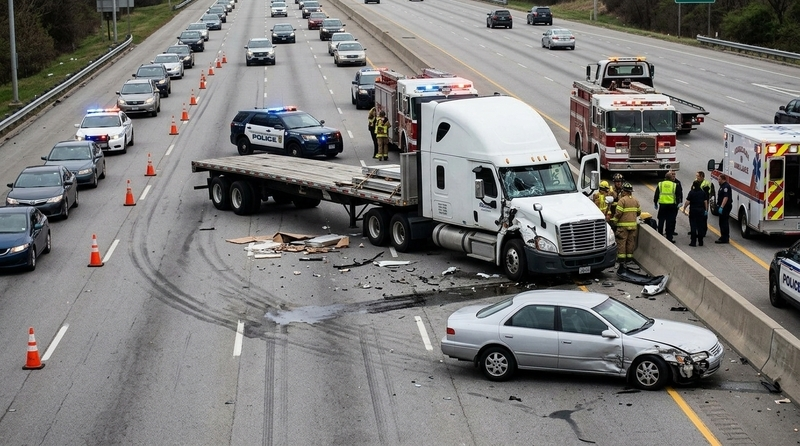
Conducting oneself in a way that preserves evidence and protects one’s rights within the first 24 to 48 hours following a truck accident is important. Doing so paves the way for a successful claim for compensation.
Let’s take a look at some key factors that should be accomplished when handling serious truck accident cases.
At the Scene: What to Do and What to Avoid
The very first thing to secure after a truck accident is to guarantee everyone’s safety. If circumstances permit, avoid driving further. Turn on the hazard blinkers and call 911 right away. Remember, it is a general consensus to not move any potential neck or spine injury victims.
Law enforcement will document the scene, and that documentation becomes part of your evidentiary record. Give a clear and accurate description of what happened but do not make any assumptions about fault. Those things can later make a claim more difficult.
Before anything is moved, take photos. The position of the vehicles, the point of impact, the road surface, skid marks, debris fields, and the condition of the truck itself are all evidence. Take pictures of the truck’s license plates, identify the DOT number visible on the cab’s door, and assess the damage on both vehicles if present.
Collect the contact information of nearby witnesses, if available. Witness accounts often become harder to secure once time passes.
Once you have been hurt in a truck accident, you should call an experienced truck accident lawyer to get you back on your feet. According to The Schafer Law Office’s website, you should not give a recorded statement to any insurance adjuster, including your own, until you have spoken with a truck accident attorney.
The people from the insurance company have specific training for getting statements that can shrink or eliminate claims. You do not need to provide one right away, and anything you say before you fully understand what happened can be used against you later.
Medical Care: Go Immediately and Keep Every Record
Adrenaline can mask pain. Traumatic brain injuries, internal injuries, herniated discs, and soft tissue damage might show up with minimal symptoms, or sometimes none at all. Getting a physician review on the same day of the crash, or within the first 24 hours, helps create a direct medical record tying the accident to what you are dealing with.
If you wait for days, even weeks, before seeking treatment, that time gap between the crash and the diagnosis becomes a point insurance adjusters rely on to dispute causation.
Retain every bit of documentation possible, including probation reports, discharge information, rehabilitation aftercare notes, radiographs, medication tables, and orthopedic therapy records. Ask your employer if you find that the injury you have sustained after a serious truck accident prevents you from attending work. The employer should be informed properly about an injured employee’s situation.
If specialists are referred, keep the paperwork from those visits too. You need to document the full extent of the medical and economic costs of an injury before a settlement can accurately reflect them.
Why Truck Accident Evidence Disappears Quickly
Not everyone recognizes the risk of being involved in a truck accident, especially when the evidence disappears almost immediately after the incident. This fact can be the most significant difference between an accident that involves a car and an accident that involves a truck.
Commercial carriers are required by the Federal Motor Carrier Safety Administration (FMCSA) to maintain the following types of records: driver logs, ELD data, maintenance and inspection reports for vehicles, and driver qualification files, along with drug and alcohol use testings. These documents establish key information needed to make a successful truck collision case.
The federal rules only tell carriers to save ELD data for six months. Dash cam footage gets overwritten within days or weeks. Maintenance logs keep getting revised, so older entries are often swapped out for fresh ones. When a trucking company learns of an accident, it takes measure so that the information disappears and that the relevant party holding such evidence complies with its established retention policies before the person who may file a claim can act.
Sending a notice of spoliation to the trucking company and its insurer immediately after the accident helps prevent the loss of evidence. Once that letter arrives, the company must not delete, overwrite, or discard records. It can face sanctions, including instructions to a jury that effectively tell jurors to assume the missing or destroyed evidence was harmful to the company’s side. Without that kind of spoliation letter, the most helpful evidence in a truck accident case may legally disappear, resulting in the case becoming way harder to prove.
What FMCSA Records Can Reveal About the Crash
Commercial trucking is a deeply regulated industry. The FMCSA lays down binding federal rules for hours of service, vehicle upkeep, driver qualifications, cargo securement, drug and alcohol testing, and commercial driver license requirements. When those standards are breached, and a crash follows, that breach can be treated as evidence of negligence.
A plaintiff does not have to debate what a reasonable commercial driver might have done. For such a violation to matter, it must first be shown that the rule was broken and that it contributed to the harm.
The ELD also specifies in its reports whether the driver extended his work time or did not stay within the driving limit required by 11 hours or less. ELD data also indicates for how long the driver took his or her mandated rest breaks and where the vehicle was parked prior to the accident. Records related to maintenance of the vehicle are checked for any mechanical problems for the brakes, tires, control or any other part that was beyond service work after repairs.
When checking the driver credentials, it should establish whether the driver has a commercial driver’s license with a medical card and drug and alcohol history. Sometimes, dispatch and internal communications reveal that drivers were forced to keep going even after the regulation of hours of service.
The FMCSA’s publicly available Safety and Fitness Electronic Records, SAFER, features carrier safety ratings and compliance statistics. Usually, a carrier with many hours of service violations or mechanical problems will base their safety culture on federal documentation. The evidence will help determine whether an accident was a one-off or part of a continuing systemic failure.
Who Is Responsible: It Is Often More Than One Party
Truck accident liability often goes beyond just the driver. The carrier that employs or has a contractual relationship with the driver is responsible for allowing only those drivers with the proper qualifications to operate its vehicles.
The carrier is also obligated to guarantee that their trucks are in good condition and the rules of hours of service are operated and adhered to accordingly. If any mechanic was involved in the maintenance of the vehicle and a mechanical failure may have caused an accident, the maintenance company would also be liable.
A shipper or loader may also be pulled into responsibility if the cargo was secured poorly and it shifted and then the driver lost control. When the driver acts as an independent contractor, not an employee, liability analysis becomes more complicated.
In a truck accident, insurance coverage may involve several policies, which requires spotting every potentially responsible party early on. The carrier usually has its own commercial policy. The driver may also have some form of coverage. Equipment owners, and maintenance contractors in particular, often hold separate policies too.
If you want to maximize recovery, you pursue every policy that could apply. That means you identify each potentially liable defendant before the litigation approach is decided.
What Not to Do in the Days After the Crash
Do not post about the accident, or your injuries, on social media. In situations that involve accidents, it is not uncommon for insurance companies and defense attorneys to watch social networks that belong to the injured party. Many deposition and court proceedings have used information from these accounts.
An example would be how pictures would be taken off an account that contradicts statements of an accident, such as one where the person claims to be immobile yet they are actively playing a sport or the accident does not sound like the one being told in court in any way.
Do not settle too quickly. Insurance companies sometimes put forward early offers before the real extent of the injuries is known and before a lawyer has formally demanded preservation of records. These initial offers shield the company from a more robust, developed claim. If you accept a settlement before maximum medical improvement is reached and before the full evidentiary record is actually assembled, the result may be only a fraction of what a fully built case would yield.
A serious truck accident sets off a chain reaction on both sides of the dispute. The carrier and its insurer start their investigation and their claims management process the same day as the crash. What you do within the first 24 to 72 hours ends up shaping whether the case that forms reflects what actually occurred and what it truly cost. You may preserve evidence, get proper medical care and get a truck accident attorney to help your case. The evidence that you gather are mostly time-sensitive, so securing them as early as possible is in your best interest.
