
Why Is My Check Engine Light Flashing Then Stops? Here’s What You Need to Know!
Nearly three decades ago, many states required and some mandated (particularly California) that automobiles have some sort of basic engine diagnostic system. By 1996, the EPA made it mandatory to have this system.
Back then, the diagnostic system was not as advanced as compared to modern vehicles these days, which now OBD-II (On-Board Diagnostics II) system to monitor engine performance and emissions.
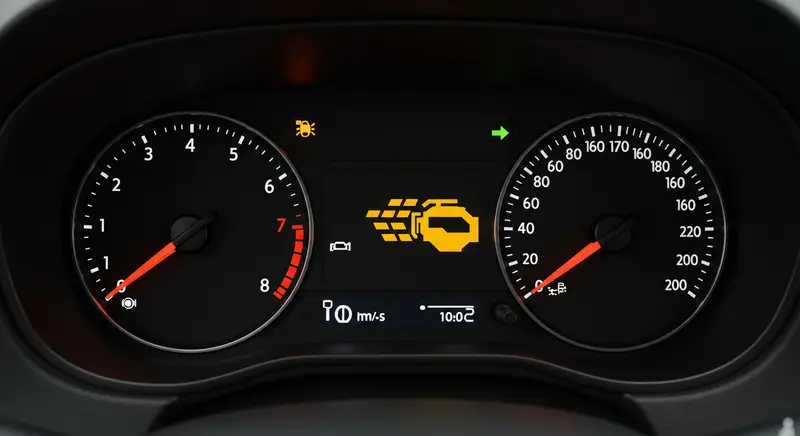
These systems are not only responsible for warning of any possible fault but also track and decide everything happening in the engine, from air-fuel ratios to misfire detection. However, since this system is not verbal at all, it communicates any underlying problems or issues through a check engine light (technically called a CEL) in the car’s instrument cluster.
If your check engine light starts flashing and then suddenly goes away, take this piece of advice: never ignore it, otherwise you will end up ruining the engine and likely have a major problem driving down the highway. But here’s everything you need to know about it.
What Does a Flashing Check Engine Light Mean?
As per SAE J1979 standard, a flashing check light warns the owner that there’s a Type A misfire detected in the engine cylinder, which is strong enough to take to damage the catalytic converter. Misfires are likely to happen in conditions where the engine is under extreme load, such as towing or climbing hills.
Not only that, expert automechanics strongly agree that a flashing check light points out engine misfires, which mostly happen when your engine has more load on it or during acceleration. The engine control module (ECM) detects this as it can possibly be due to failing spark plugs, ignition coils, or a problem in fuel delivery.
Why It’s Dangerous?
Since when engine misfire, the unburned or partially burned fuel leaves the exhaust manifolds and enters the exhaust pipe. In the catalytic converter, it can ignite due to extreme heat. Continuous and prolonged misfiring can melt the catalytic core, which is made of ceramic monolith. And, its replacement can cost you thousands.
6 Common Causes of Why is my Check Engine Light Flashing then Stops?
A flashing check engine light commonly indicates issues related to the ignition system, which is essential for proper fuel combustion. If any component of the ignition fails or is near failure, the MIL will start flashing. Possible causes causing ignition issues are:
- Worn Spark Plugs: Every engine component has an age, and so do the spark plugs. If they lose their ability to produce a good spark, they will let unburned fuel into the cylinder, which causes misfire and eventually catalytic converter replacement.
- Failed Ignition Coils: Ignition coils play a vital role in converting electrical energy to the voltage required to ignite the fuel properly. In case of the failed coil, this will prevent the spark plugs from firing properly.
- Cracked Distributor Caps (Older Models): In older vehicles, distributor caps are likely to get cracked due to extreme heat in the engine compartment, therefore can cause loss of spark energy, hence leading to misfires and a flashing light.
- Clogged Fuel Injectors: One of the most common reasons is dirty fuel injectors, which cannot deliver the exact amount of fuel required by the engine for proper combustion, causing misfires.
- Low Fuel Pressure: In modern engines, fuel is required at high speed and pressure since most engines have fuel directly sprayed into the cylinder. A weak fuel pump can reduce the fuel pressure when injecting it through the injectors, and can cause misfires, which trigger a flashing check engine light.
- Failing Crankshaft or Camshaft Position Sensors: Both modern gasoline and diesel engines have sensors to decide the fuel mixture. One of these sensors is the crankshaft position sensor that tells the ECU about the timing information. If the sensor is not working properly, it leads to misfires and eventually a flashing light.
Why Does Flashing stop?
The Engine Control Module (ECU) is thoughtfully designed to keep the engine running even under the worst conditions, so the passengers can reach their destination safely. One of the reasons that a flashing check engine light stops without going to any mechanic, the system detects engine conditions have returned to within acceptable thresholds.
However, this doesn’t necessarily translate into the problem being resolved—it may simply be temporarily away. Many top handbooks such as Bosch Automotive, have reiterated that reoccuring misfires are often associated with certain RPM ranges, engine load, or temperature fluctuations.
What Should You Do If the Engine Light Is Flashing?
If your car or truck ever shows a check engine light, even for a fraction of a second, take immediate action. A check light only turns on when there’s a possibility of potential damage, particularly with your catalytic converter. Worry not, here’s what you can do to save your car from potential damage:
- Step 1) Scan for Trouble Codes: You can scan the engine codes using an OBD-II scanner yourself or go to auto part retailers. Most of them offer free code-reading services, which can greatly help you identify the underlying problem before it’s too late.
- Step 2) Review Freeze Frame Data: Since most of the misfires are associated with the check engine light, you can check the freeze frame data stored by the ECM, which will show you at what engine load, or RPM, and coolant temperature the misfire occurred.
- Step 3) Perform an Inspection Yourself: As most common reasons behind misfires can be spark plugs, ignition coils, and vacuum hoses, you can pop the bonnet and see for yourself if any of these show signs in poor condition or are torn out.
- Step 4) Get Inspected by a Professional: If you cannot find any visible issue within the engine area, then simply schedule a diagnostic with any of your trusted and certified mechanics. Remember that modern engines are way more complex than traditional carb engines, and the repair cost of the engines is higher than before.
Conclusion
A flashing check engine light isn’t just a casual warning, it’s your car asking for immediate attention. In every possible scenario, the check engine light only signals an active misfire, which, if ignored, can cost you thousands in replacing your damaged catalytic converter.
Not only that, even if the light stops flashing temporarily, don’t assume the problem is gone. The ECM can decide that stable conditions are there to drive temporarily and turn off the check engine light. But the root cause, be it ignition, fuel delivery, or a failing sensor, can ruin your peace anytime. So, you should never ignore what your car wants to tell you before it’s too late!
