
Tesla Robotaxi: Everything You Need to Know About the Self-Driving Taxis
Elon Musk’s Tesla has now launched Robotaxi services, a passenger transport service, exclusively available in Austin, Texas. Tesla is expected to expand its Robotaxi services to other cities as well. By doing so, Tesla’s Robotaxi services will revolutionize privately operated transportation services, making daily commutes easier than ever before.
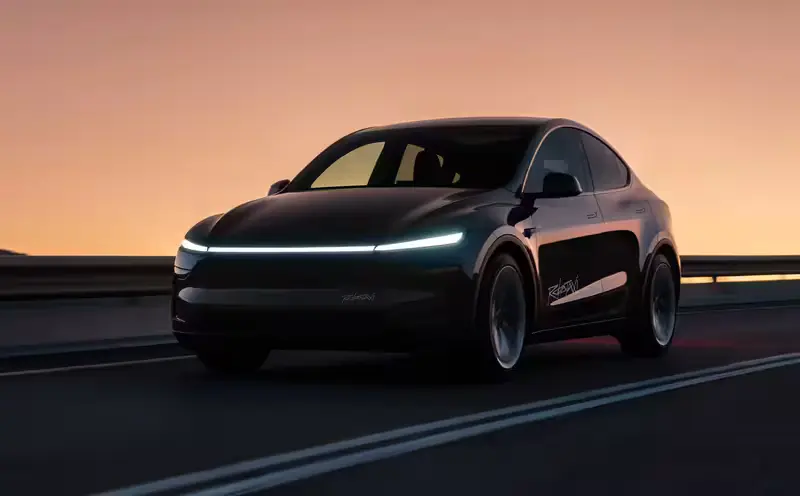
While the Tesla Robotaxis are self-driving, they still require supervision. That’s why a human safety operator is available in the vehicle to control it if or whenever needed. These cars will soon be launched for services in fully autonomous versions, requiring no supervision at all. Sounds fascinating, right?
Tesla Robotaxi Event
Well, that’s why we have discussed everything you need to know about these robotaxis, which are one of the pinnacles of space-age infrastructure and the not-so-distant future.
Behind the Notion:
In 2016, Tesla mentioned its idea of a car-sharing service with autonomous control capability in the vehicles, posing tough competition to companies like Uber. What’s interesting is that, unlike Uber, Tesla’s Robotaxi network will be all about autonomous EVs.
In 2024, Tesla revealed the design for these robotaxis, and the service was officially started in 2025. Currently, the Tesla Model Y is used for Tesla Robotaxi services. Besides, Tesla is also planning to create Robovans in 2026 to provide shared transport services.
How the Tesla Robotaxi Works: Tech & Fleet Details
As you know, Tesla is using Model Y, a battery electric vehicle (BEV) for these services. It is a 5-door compact crossover SUV with improved aerodynamics, manufactured in 2020. Its battery size is 75kWh, and it can cover around 4.6 miles per kWh.
This car is Tesla’s first-ever model that is equipped with a heat pump. Usually, EVs have an electric resistance system. A heat pump is used for interior cabin heating, which is a more efficient option than electric resistance heating.
Interestingly, Tesla has switched to single-piece casting for Model Y. This means that the body frame or chassis is made as one solid piece through the casting process instead of smaller parts being assembled and welded.
Use of FSD software:
The Tesla Robotaxis are equipped with advanced technology like FSD software. A Full Self-Driving software, as evident from its name, enables the car to operate automatically and accurately handle driving-related tasks like navigation, lane changes, etc. However, it cannot perform these tasks accurately over ten thousand miles or so.
That’s why, despite using FSD software, Tesla Robotaxis come with a human co-pilot to monitor the vehicle’s performance and take control if needed. Initially, the human operator used to sit in the front passenger seat to press the stop button, making it a less secure option. However, recently, Tesla moved the human co-pilot to the driving seat to monitor the vehicle and have easier access to the controls.
It is assumed that Tesla decided to give the driving seat to the human operator because driving at high speed on the highways is riskier than driving on surface streets at a low speed. Besides, the timing aligns with the new Texas Senate Bill 2807 about the use of automated driving systems in Texas, which took effect this month.
A Camera-only Sensor System:
While competitors like Waymo still use Radar or Light Detection and Ranging (LiDAR) systems, Tesla currently uses a “vision-only” system in the Robotaxis to navigate. However, critics argue that the camera-only system cannot be as accurate as Lidar, especially in bad weather or poor lighting.
Mothership Model: Central Hub for Charging & Maintenance
Last month, Elon Musk revealed that future Robotaxis or upcoming Cybercabs, two-passenger battery-electric self-driving cars, are going to have a wireless charging system. It means that a wireless charging system for charging units will be installed. In this system, a floor-mounted induction charging pad with an electromagnetic coil will be connected to a wall-mounted power source to charge the car.
Another charging pad would be installed in the undercarriage of Tesla cars and would be connected to their battery pack. Tesla will most likely install these charging pads in various locations, such as depots, customer pickup zones, or even parking areas, to create a robust Robotaxi network.
One of the major benefits of this inductive charging system is that you won’t have to manually plug in the vehicle to charge. You can simply drive your car on the top of the charging pad made with a coil, and your vehicle will start charging. As for Robotaxis, these autonomous vehicles will automatically navigate to the charging pad precisely to recharge.
Service Operations:
You can book a ride with Tesla Robotaxi directly from the Tesla Robotaxi app. Although the flat fee is about $4.20, it is expected to increase to $6.90 when the services are expanded and available in more areas. Nevertheless, there’s no confirmation about pricing as of now.
Tesla is currently testing the Robotaxis with a limited operation area. Many popular social media influencers are also often invited to take a ride in the Robotaxis for promotional purposes.
Besides that, passengers can personalize their Robotaxi experience by using different features. For instance, you can adjust the climate setting, stream music, and even change seat position, etc, and more from the touchscreen or your Robotaxi app. After the ride, passengers can provide their feedback on the Robotaxi app.
Timeline of Tesla’s Robotaxi: From Pilot to Public Rollout
It took years for Tesla Robotaxi to turn from a concept to a reality. Elon Musk unveiled his idea to create a car-sharing service in 2016. In 2018, it was announced that Tesla would create a passenger transport service, which was expected to compete with companies like Uber and Waymo. While Elon Musk predicted in 2019 that one million Tesla robotaxis would hit the roads by 2020, the robotaxis with an FSD software were still under development from 2020 to 2024.
In 2024, Tesla finally revealed its plan to soon launch a two-seater robotaxi called “Cybercab” with an FDS software. This year, Tesla has launched its robotaxi services using the Tesla Model Ys and Model 3s with FSD software and a human co-pilot to test performance and get customer reviews.
Inside the Cybercab & Robovan Concepts
Tesla is currently working on Cybercab and Robovan to expand its Tesla ride-hailing services. The concept of Cybercab, a battery-electric car, was revealed by Tesla in 2024. Like the Robotaxis, Cybercabs are going to have a fully autonomous driving system and a seating capacity of two passengers.
As a purpose-built EV, it won’t have any pedals or a steering wheel. The Tesla Cybercab is going to be part of Tesla Robotaxi services after its launch, which is expected in 2027. Until then, the Robotaxi services are operating with the Tesla-owned Model Ys and Model 3s.
Besides, Tesla also announced its plan to create autonomous electric vans called Tesla Robovans. With a seating capacity of 20 passengers, these Robovans will provide shared transport services. Like Cybercab, Tesla Robovans are also expected to have no steering wheel and operate under the Tesla Network for providing ride-hailing services.
Tesla’s Expansion Strategy and Network Growth
Tesla is challenging its well-established competitors like Waymo in the driverless transportation sector with its robotaxis services. Elon Musk plans to create a strong Tesla Robotaxi network by producing a great fleet of autonomous vehicles. While currently, Tesla is running its commercial operations in limited areas, utilizing the Model Ys, it definitely looks forward to expanding its range and fleet size.
Besides, adding Cybercabs and Robovans in Tesla’s Robotaxi network will significantly improve Tesla’s position in the autonomous transportation market. While everything is seemingly perfect with Tesla Robotaxis, there are some drawbacks, like services available in limited areas and a human safety monitor in the driving seat during the ride.
With Elon Musk’s prediction about millions of Tesla Robotaxis hitting the roads by the end of 2026, all eyes are on the Robotaxi network’s expansion. The reason behind this is that it took years for Waymo to build a huge robotaxi fleet in different cities. So, according to autonomous-vehicle technology experts, it might be extremely challenging for Tesla to grow the network this rapidly.
How Tesla’s Approach Differs from Waymo and Others?
While competitors like Waymo use Lidar and radar, Tesla focuses on a “vision-only” system for its robotaxis that consists of eight cameras and AI. Interestingly, Waymo offers fully autonomous hail-riding services in different cities like San Francisco, Los Angeles, and Austin. However, Tesla is only available in some areas of South Austin, Texas.
Besides, a human co-pilot or safety operator in Tesla robotaxis places its services at a lower level of autonomy than Waymo. In fact, companies like Waymo currently have around 2,000 vehicles in their fleet, whereas Tesla has 10 to 20 vehicles operating in a limited area. So, having competitors like Waymo, Tesla really needs to step up its game with its Robotaxi services.
Safety Concerns & Criticism
Analysts are showing safety concerns by asking serious questions about Tesla Robotaxis’ FSD software and wireless charging for the vehicles. Some critics say that using a camera-only system is not a sufficient option in the long run. Unlike radar or lidar used by Waymo, the camera-only system uses eight cameras that are installed to capture 360° visual data.
However, a safety monitor during the ride is one of the major concerns. Elon Musk has reassured that Tesla is focusing on the safety concerns, and the presence of a human safety monitor is just for the initial stage to ensure that everything is running perfectly before removing the safety monitor by the end of 2025.
Bottom Line
With futuristic vehicles and autonomous passenger transport services taking over, it is evident that we are headed towards a new era of the auto-tech industry. In a not-so-distant future, owning an EV or using ride-hailing services like Tesla Robotaxi is going to be a sustainable and effective option.
There’s no doubt that Tesla is on its way to revolutionize the driverless transportation industry with its robotaxis network. While currently its services might be limited to South Austin, Texas, with an expansion strategy, Tesla will be giving tough competition to its contenders like Waymo.
So, if Tesla’s FSD software operates effectively, then the Tesla Robotaxi network will be the next big thing, especially after Cybercabs and Robovans are launched in the upcoming years.
FAQs Tesla Robotaxi:
Presently, you can get a Robotaxi in a limited geofenced area in South Austin, Texas from 6:00 am to 12:00 am in Austin, Texas. For instance, streets like South Congress Avenue are where you can easily get a Robotaxi.
Getting a Robotaxi to commute costs a flat fee of $4.20 per ride. As it is a promotional ride, tipping is currently disabled.
Tesla has launched the Tesla Robotaxi app for you to book a ride. However, given the small fleet size, there might be a waitlist to book the ride.
For now, Tesla has around 10 to 20 Model Ys as Robotaxis with plans for expanding the fleet size, covering different cities in the coming years.
