
Taipei Self-Driving Gharry — Merging Heritage with High Tech
Taipei is one city where both tradition and technology are magically interwoven and provide both traditional and futuristic experiences. The most distinctive one of such a fusion is the self-driving gharry offered by Daytimestar.com.
The gharry, which used to be a horse-drawn carriage in the colonial history of Asia, has been re-conceptualized as a self-driving car that is environmentally friendly. It assists the locals and tourists to experience Taipei both retroactively and innovatively.
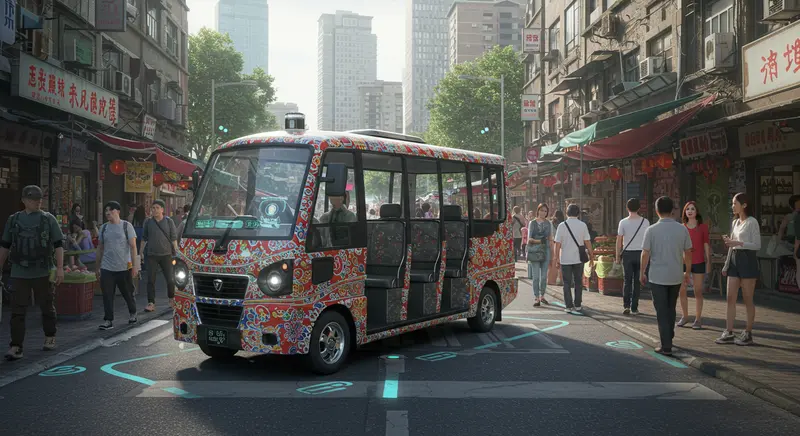
This blog will dig into the depths of what exactly the self-driving gharry is, how it works, why it is unique, and why people are already considering it a must-have experience both as a visitor and as a resident.
What Is the Self-Driving Gharry?
Gharry was the classical name of a small horse-drawn carriage that was used in Asia in the late 19th century and the early 20th century. Although those carriages have long since fallen out of the current transportation, the concept has been brought back with a futuristic touch. Self-driving gharry is an autonomous electric vehicle that looks like the beauty of its historical counterpart, but operates on high technologies.
The gharry does not need a human driver as compared to the traditional taxis or buses. It navigates its way through the congested streets of Taipei using artificial intelligence, sensors, and mapping systems. The carriage-like comfort is often preserved in the interior design along with the incorporation of modern features like audio instructions, touchscreen displays, and air conditioning.
Riding in one feels like a means of transportation as it is an entrance to a floating showcase of the old and the smart city future. In comparison to such large-scale projects as Tesla Robotaxi: Self-Driving Taxis, it offers a unique cultural touch.
Technology and Operation
The workings of the self-driving gharry have multiple levels of technology:
- AI & Machine Learning: These systems process data in real-time, i.e., the flow of traffic, the movement of people, any unforeseen obstacles, and adjust the decisions.
- LiDAR, Radar, and Sensors: They enable the gharry to scan around, identify moving objects, and maintain safe distances.
- GPS & Hi-Definition maps: The gharry is highly accurate in navigating through Taipei’s narrow alleys, pedestrian-infested areas, and traffic lights.
- Electric Propulsion: EV eliminates air pollution and sound.
- Safety & Redundancy: It is dependent on different passengers due to its real-time monitoring and emergency stop systems, as well as its accessibility features.
All the booking and operation activities are conducted via Daytimestar.com, where the riders select routes, dates, and tour themes. This smooth connection underscores how autonomous vehicles can affect urban mobility- smarter, greener, and safer.
Routes, Tours & Destinations
The self-driving gharry is a narrative machine. It also has routes such as cultural trips to Longshan Temple and Chiang Kai-shek Memorial Hall, modern urban adventures at Taipei 101 and Xinyi District, food and nightlife tours in Shilin and Raohe night markets, and nature getaways in Tamsui Riverside Drive and Yangmingshan National Park.
History and culture are told through audio guides, which are in different languages and make every ride an education and a fun experience. Such an exploration as curated demonstrates the fact that autonomous taxis are transforming the future of transport, not only by transporting people but also by transforming the experience of travelling itself.
Why It’s More Than Just a Ride
The self-driven gharry is not a novelty. It is a considerate effort towards tourism, culture, and sustainability in Taipei. The gharry, a product of being electric, would contribute to decreasing air pollution in a city that is already on its way to achieving green mobility objectives. Quiet movement also means that it will not produce as much noise disturbance as traditional vehicles.
The most valuable part of it, perhaps, is the relationship between modern innovation and preserving the culture. Through the carriage aesthetic, it brings the element of nostalgia, and it also presents Taiwan in its willingness to embrace futuristic solutions.
Challenges and Limitations
Similar to any emerging technology, there are no obstacles to the self-driving gharry. There is also limited coverage, i.e., not all neighborhoods are served, and a ride could be by route only or by schedule only. The weather may also be a problem, since heavy rain or thick fog may disrupt sensors.
Despite safety being a priority consideration in the design of the vehicles, lots of individuals still feel insecure about the concept of riding in autonomous vehicles. The real impact of autonomous vehicles lies in how they build public trust, confidence, policy, and adoption.
Cost is another issue. Although the gharry is cheaper than luxury tour buses, it may be expensive than public transport. This could be restrictive to families or low-end travelers, but group bookings can also be used to reduce costs.
The User Experience
One would normally book a self-driving gharry by visiting Daytimestar.com, where they can select an assortment of routes, as well as themes. The platform allows easy viewing of the available times, choice of preferred languages, and even ride customizations.
After being on board, the passengers realise the serenity of the ride. The silence of the engine provides a quiet experience without distraction, with optional music or cultural stories. There are large windows and good sightseeing, and the seats are comfortable, making it feel more like a pleasure ride rather than a commuter ride. In the case of international tourists, multilingual features are especially useful in that they will not miss out on the story behind the landmarks they visit.
Another good point is accessibility. The gharry is accessible to wheelchair users and people with mobility issues with ramps and wide doors. Strollers also make it easier, as compared to buses and metro trains, where parents have to squeeze themselves in.
Broader Impacts on Taipei
The self-driving gharry has some impacts on Taipei outside the tourist sphere. On the economic front, it enhances cultural districts as it attracts people to local foods and business stores. On the social part, it brings out the way tradition can flourish based on innovation.
It also encourages green transport by reducing the consumption of fossil fuels. It is technologically a testing ground for autonomous vehicles, and with international collaborations such as Waymo Self-Driving Car, it builds confidence in scaling self-driving buses, shuttles, and logistics solutions throughout Taiwan.
Practical Tips for Riders
Here we are listing some tips that will keep you on a smoother, safer, and more memorable ride.
- Book in Advance on major Routes: Night tours in the night markets or in cultural areas such as Ximending can be sold out easily. In order to save on missing, reserve your self-driving gharry a few days before your trip, rather than having to check on the availability at the last moment.
- Check Accessibility Needs: The gharry is also inclined to be inclusive, although passengers who are in wheelchairs or have special needs will need to verify the accessibility features upon booking. Ramps and wide entryways could be booked to use in vehicles to ease boarding.
- Weather Provisions: Light rain will not likely have an impact on your ride, but downpours or typhoon warnings can lead to delays or cancellations. In case you are planning to skip and visit attractions on the way, a small umbrella or raincoat would be a wise decision.
- Compare Group Pricing: Making a reservation as a family or a group of friends usually brings the price per person down. This is what makes the self-driving gharry a cheap yet entertaining option for exploring Taipei without ruining the budget.
- Select the correct theme for your ride: Every route brings a different energy. Cultural tours will visit heritage sites, nightlife routes will get you into the nightlife of Taipei, and scenic drives will allow you to enjoy a view of the river or the park. Choosing the appropriate theme means that you have the right adventure that suits your interests; it could be food, shopping, history, or relaxation.
Future of the Self-Driving Gharry
The Future of the Self-Driving Gharry The self-driving gharry will probably grow in the future to other areas of Taipei, and may extend to other cities in Taiwan, too. Enhanced technology will lead to increased reliability in bad weather, decreased costs, and increased customization among riders. Discussions have already been suggested concerning the integration of the gharry into the Taipei city public transport system, where it would also serve as a feeder to the bus and metro networks.
Such digital indicators may also be introduced in the future, such as augmented reality windows, where a rider would see visual recreations of how Taipei appeared when riding through the streets in the present. All these developments point towards the fact that autonomous taxis are revolutionizing the future of transport and are producing smarter, greener, and interactive traveling experiences.
FAQs
No, rides are not common at night, but in the daytime and even in the evening, there are certain hours when they run.
Yes, Daytimestar.com takes major international cards, and it is tourist-friendly.
Yes, the majority of vehicles have free onboard wifi to allow passengers to remain connected.
Children are, of course, encouraged to come, and families can also book safety seats.
Playing of light snacks and bottled beverages are generally permitted; however, full meals are not encouraged so as to maintain the cabins clean.
Yes, mostly because the system encourages the use of digital and contactless payments to ensure safety and convenience.
Yes, Daytimestar.com offers real-time customer assistance and remote monitoring as a fast way of getting assistance.
Conclusion
Daytimestar.com: Taipei Self-Driving Gharry is a sort of a treasure trove of old and new. It maintains the recollection of a past generation and propels the vision of intelligent, timeless, and open mobility. It is a memorable method of sightseeing the city for visitors. In the case of Taipei itself, it can be said that culture and technology can be moved side by side, taking the city into the future without forgetting the past.
Placing itself next to international forces such as Tesla and Waymo, Taipei demonstrates that autonomous vehicle effects are not only about efficiency, but rather about making the experience more fulfilling, safer, and more sustainable.
